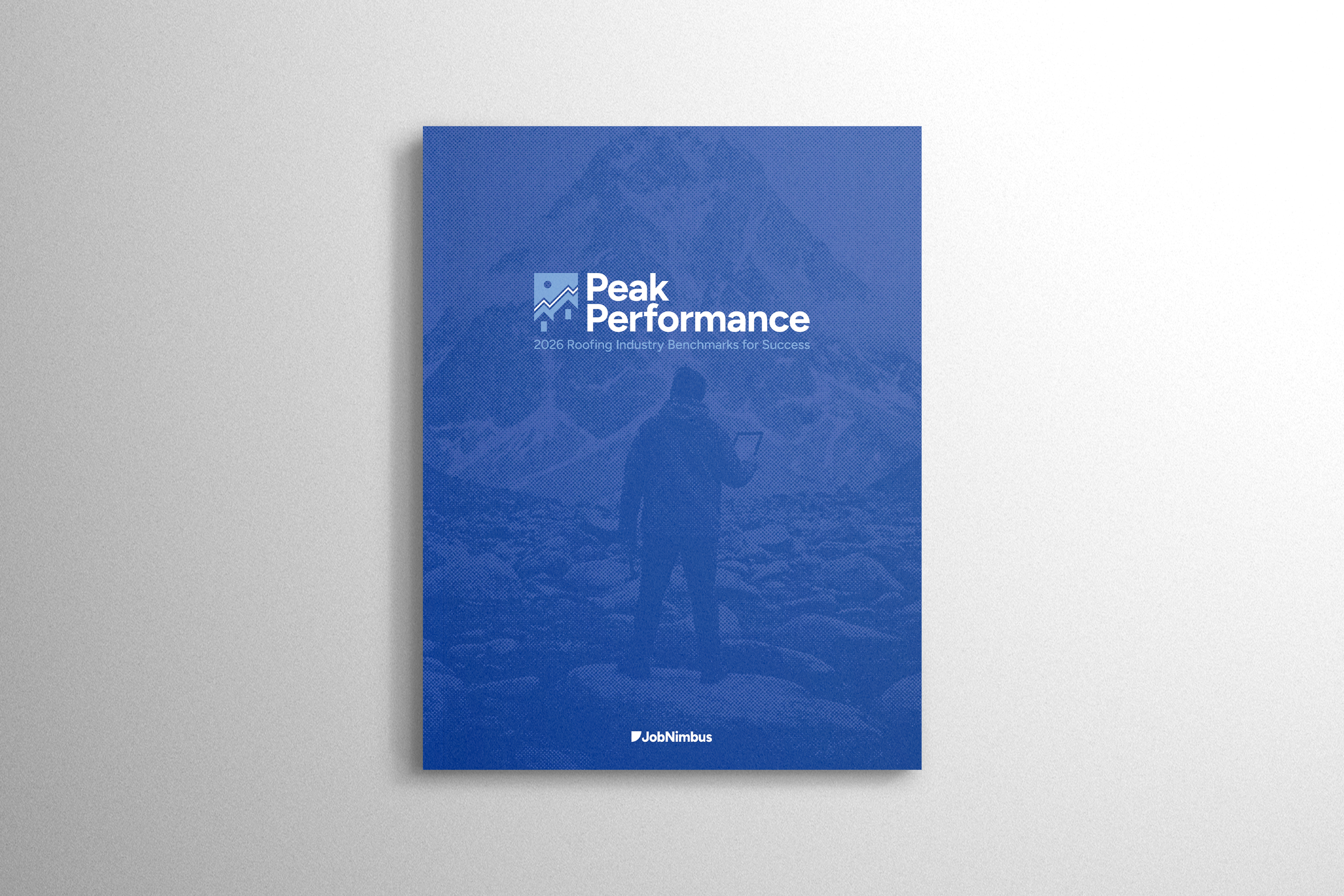
Peak Performance 2026 Editorial Layout
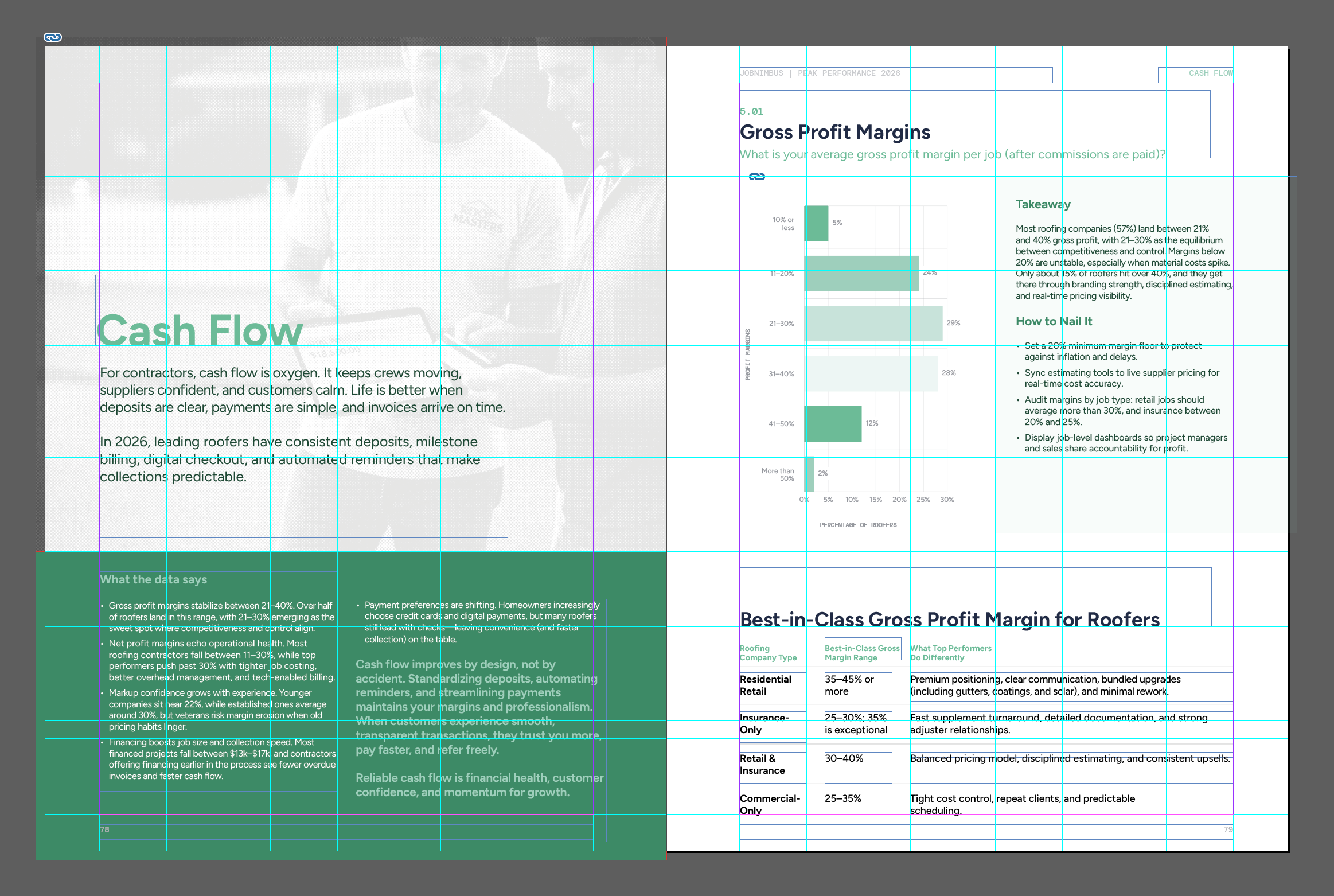
The Peak Performance Report is JobNimbus's annual industry benchmark publication — and this year, I took the opportunity to rethink how it was built from the ground up. By introducing a new grid system, I gave the layout a flexibility and visual variety it hadn't had before, allowing nearly 130 pages of data-heavy content to breathe, flow, and actually feel worth reading.

What made this project uniquely demanding — and uniquely rewarding — was the scope of ownership. I produced the roofing report almost entirely on my own from a design standpoint, and took on the fencing industry report simultaneously, a first for the company, adding another 110 pages to the workload. The result was two polished, publication-ready reports built on a system designed to scale — and a design process that's in a much better place for next year.
In the 2026 report I refined the end-to-end production workflow, introducing new charting software to translate raw data into clean, consistent visuals and establishing a clearer handoff process between all the moving pieces: data spreadsheets, Illustrator, the charting tool, and the final print composition.
What used to be a fragmented process became a more intentional pipeline, with each stage feeding cleanly into the next. The result was less friction, fewer errors, and a final file that came together the way a 130-page publication should — deliberately, and with room to actually focus on the craft.
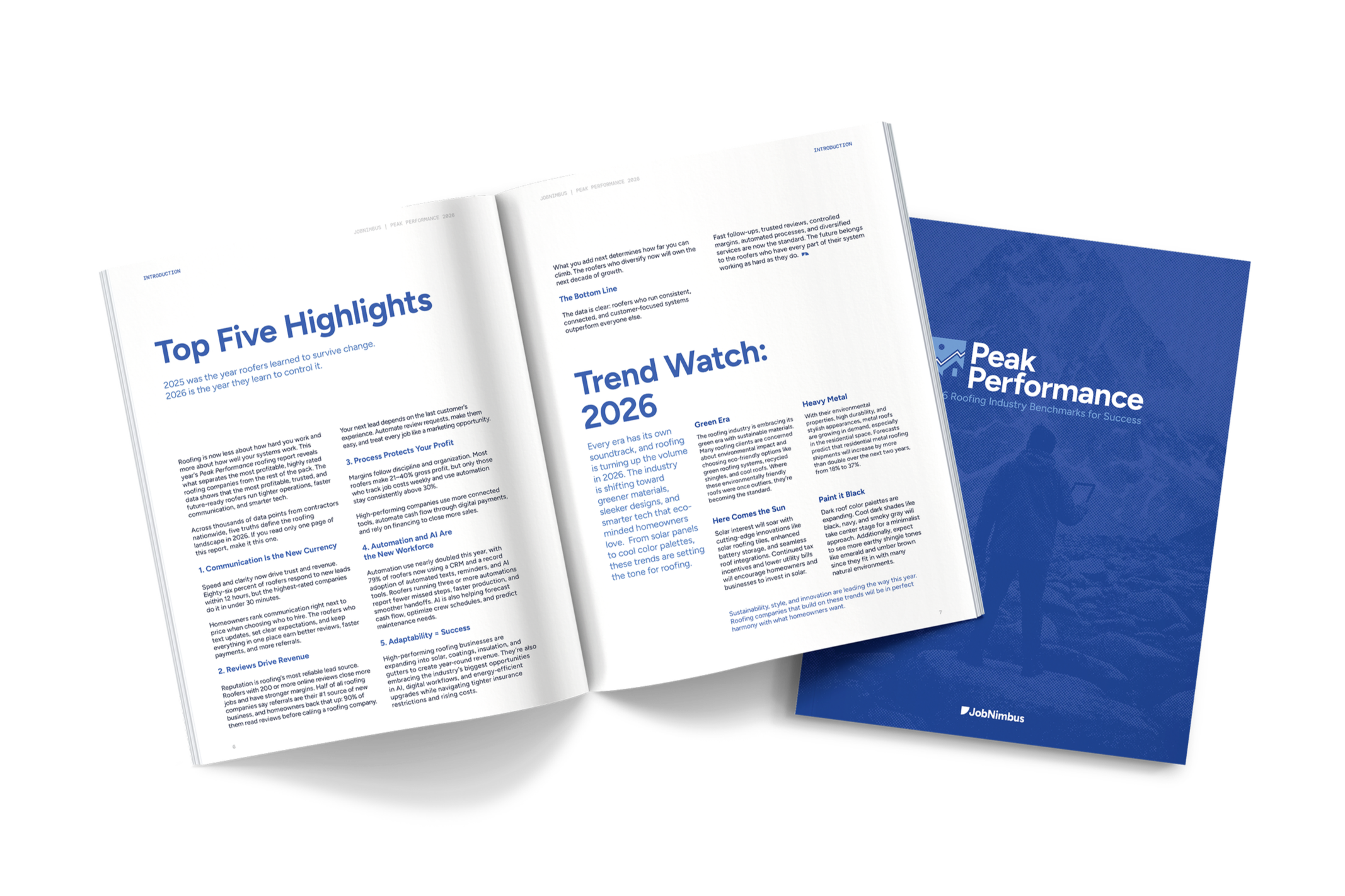
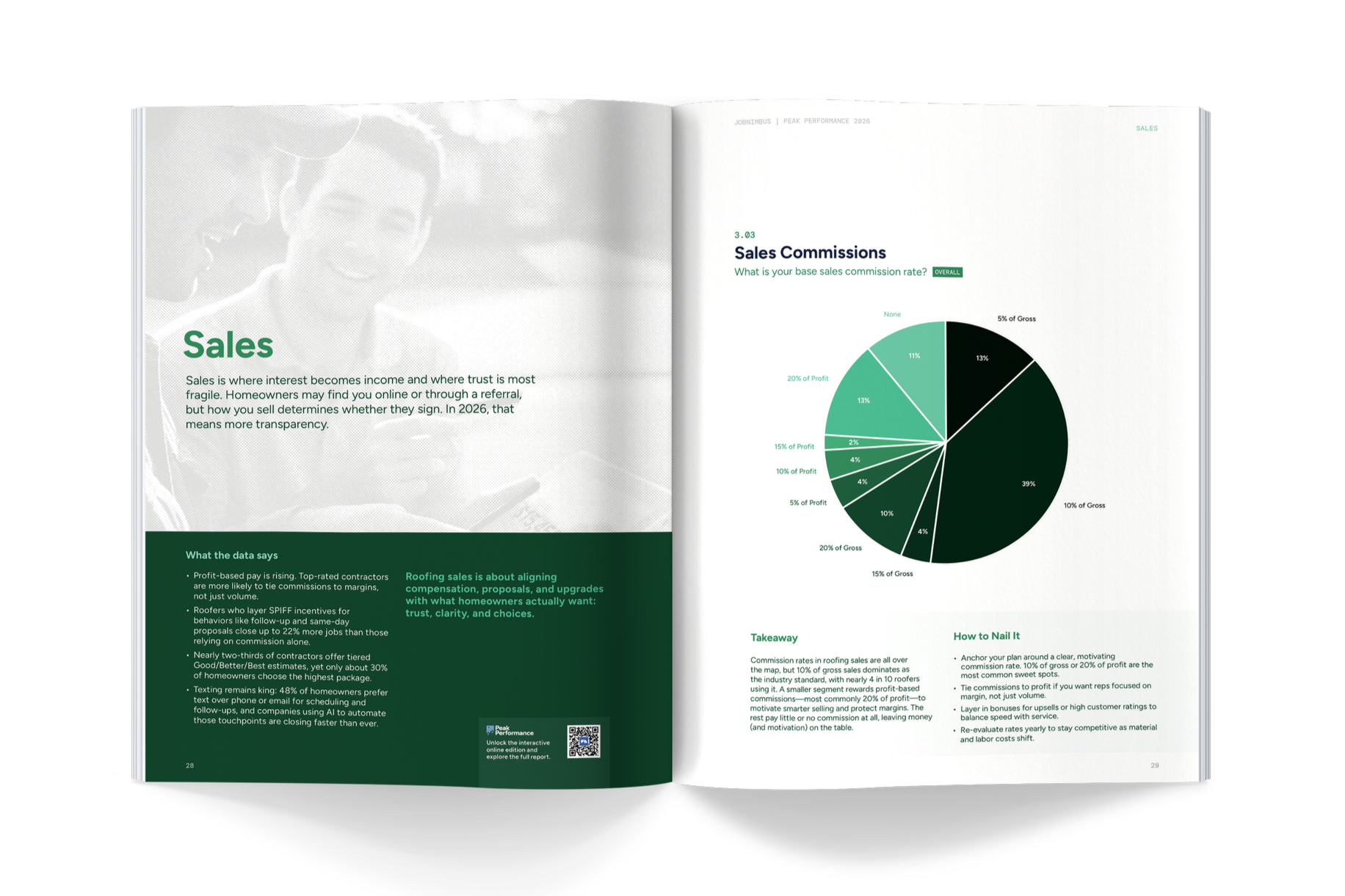
The grid system I designed from scratch was the quiet backbone of the entire report. Rather than forcing every page into a single rigid layout, I built a flexible multi-column structure that could shift and adapt — accommodating everything from full-bleed images to dense data sets to more editorial, text-forward spreads.
Consistent margins and spacing gave the whole document a sense of visual cohesion even as the layouts varied, and the modular nature of the system meant that sections could be rearranged without the whole thing falling apart.
That same modularity paid dividends in production too — with a reliable system of reusable, interchangeable layouts, building out 130 pages became significantly faster than starting from scratch on every spread. For a report that grows and changes year over year, that kind of structural flexibility isn't just a nice-to-have — it's what makes the design sustainable.
— Former Customer